Whether you're from academia, industry, or a forward-thinking organization, we welcome collaborations that spark innovation - be it in research, partnerships, or deeper engagement.
Edit Content
AI’s Biggest Blind Spot
The AI we’re building today
is fundamentally flawed.undermines world's linguistic diversity.think for the few, not the many.
This creates massive bias and technological limitation. This is AI’s biggest blind spot.
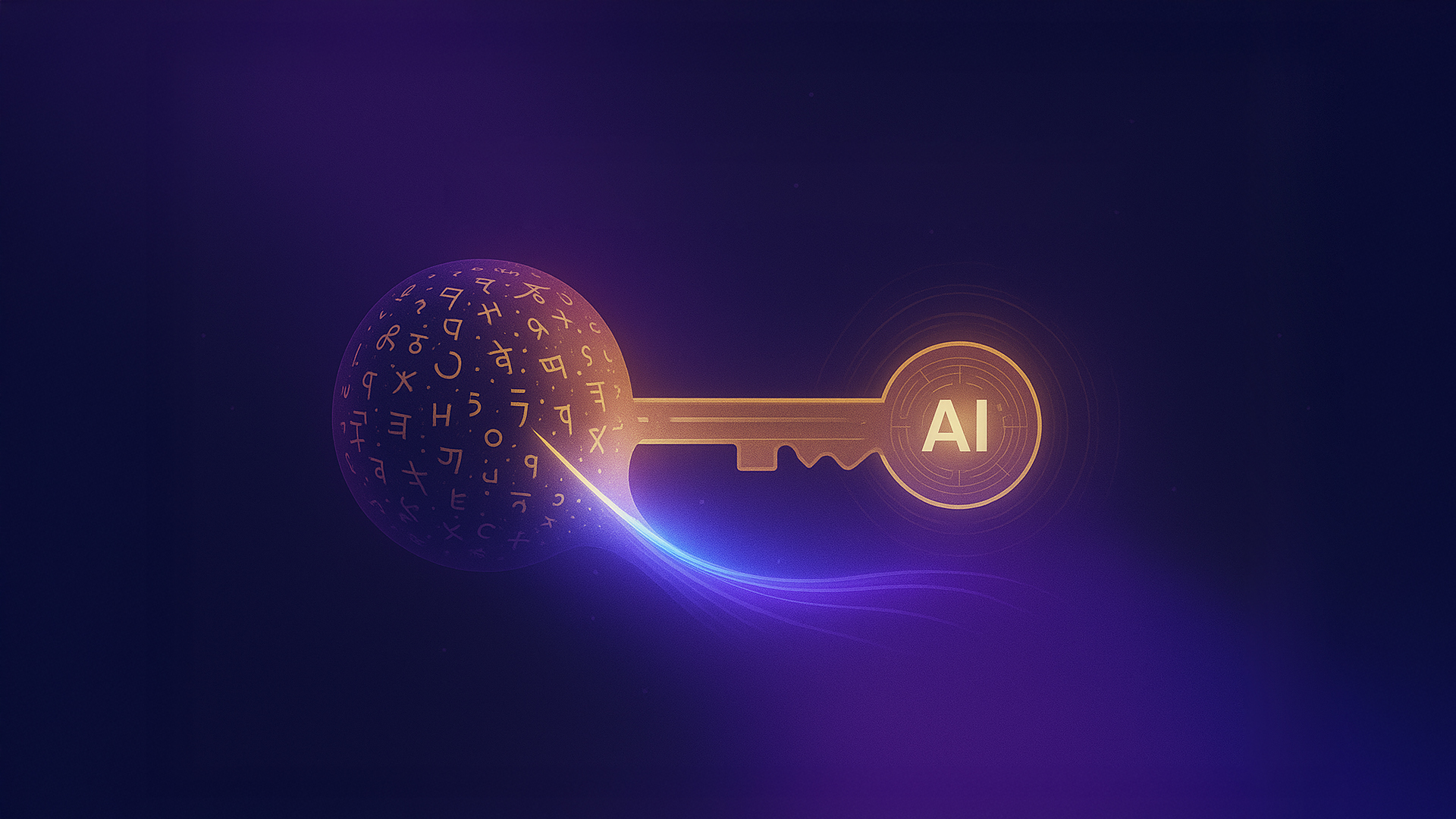
To solve it, we are building the interpretation layer (Matr) for artificial intelligence.
ZWAG is an AI research and infrastructure company building technologies that help machines understand human language and meaning more accurately.
Today’s AI systems are built on assumptions that ignore most of the world’s linguistic and cultural depth. What gets lost in this process is more than just translation, it is meaning, context, emotion, and global intelligence.
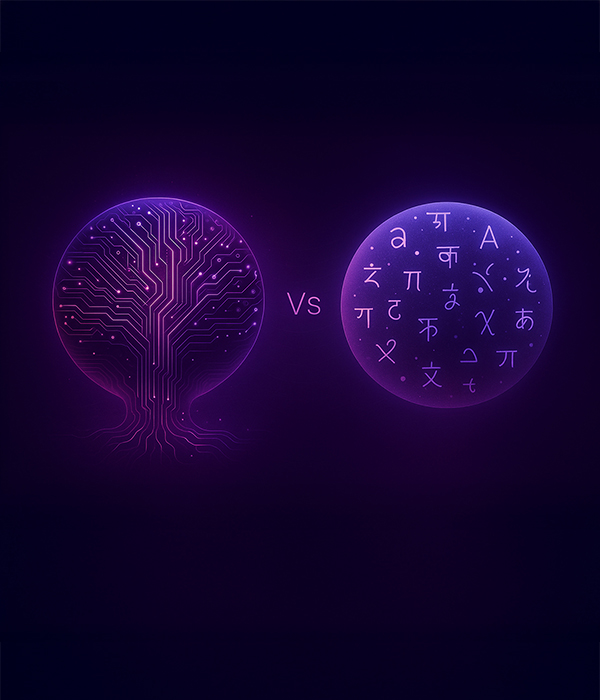
AI thinks in English. The world doesn’t. This mismatch strips away meaning, culture, and emotion, leaving most of the world misunderstood by machines. More languages doesn't mean better understanding.
Today’s AI lacks a true foundation for global comprehension. Even advanced AI architectures today are built on culturally narrow foundations. The breakthrough may require questioning the architectural assumptions underlying all current approaches, not just optimizing within existing paradigms.
Opens doors to cultural knowledge currently inaccessible to AI.
Zero retraining | Zero parallel datasets
Up to 2.14× more correct translations without retraining the AI
Mātr encodes meaning.
The Universal Interpretation Model (UIM)uses it to help AI understand humans.
Across 9 language pairs, our system intervenes (finds errors) on about 15% of outputs on average (change rate), with an average intervention precision of ~61%.
What’s important: COMET, BLEU, and similar metrics show near-zero change, but through typology-driven analysis we explicitly detected and corrected interpretation-level errors (word order, case marking, morphology, register) that these metrics systematically fail to see.
In structurally profiled languages, each wrong output corrected yields upto 2× or more real linguistic gains per error, even when standard metrics report “no difference.”
To make AI truly inclusive, we need to move beyond translation and into interpretation. The Universal Interpretation Model (UIM) does exactly that bridging the gap between diverse human expression and machine comprehension through a new foundation of understanding. Mātr UIM doesn’t retrain AI models. It corrects their outputs intelligently.
Here’s what happens, step by step:
It detects AI mistakes
Large language models often produce translations that look fine but break the real rules of a language. Mātr UIM first scans the AI’s output to detect these hidden errors.
STEP 1
It checks against real language profiles
Every language has a structured profile - how sentences are ordered, how meaning is marked, how grammar works. Mātr UIM compares the AI output against these profiles.
STEP 2
It generates multiple options and re-ranks them
Instead of trusting the first AI answer, Mātr UIM looks at multiple candidate outputs and re-ranks them based on linguistic correctness, not popularity or probability.
STEP 3
It applies linguistic constraints
The system enforces rules that the language requires - such as correct word order, required markers, or proper meaning selection—so the output matches how native speakers actually speak.
STEP 4
It uses four correction methods where needed
• Candidate re-ranking – chooses the most linguistically correct option
• Linguistic constraints – enforces grammar and structure
• Synthetic data signals – strengthens weak languages
• Vector reverse biasing – reduces recognized bias in AI outputs
STEP 5
The result: corrected AI output
The final output is still generated by the original AI model - but now it is structurally correct, contextually accurate, and native-speaker aligned, especially for linguistically diverse and low-resource languages.
STEP 6
Mātr UIM sits between AI generation and final output, ensuring language correctness before the answer reaches humans.
Voices from the Field
What the Experts Are Saying About AI’s Language Problem
From leading linguists to AI researchers, professionals across the globe are raising the alarm: today’s AI is built on a narrow linguistic base that excludes most of the world. These quotes highlight the growing demand for a more inclusive, culturally aware foundation in artificial intelligence.
“If you don’t publish papers in English, you’re not relevant… One of my biggest concerns is we’re going to exacerbate the bias for English and English speakers.”
Pascale Fung
Director of the Center for AI Research, HKUST
"It kills diversity. It kills innovation.” (On how English‑centric AI models harm cultural richness)
Thien Huu Nguyen,
Computer Scientist,
University of Oregon
“They’re often much worse at parsing languages other than English, leaving non‑English speakers at risk…”
Emily M. Bender
Linguist and Professor,
University of Washington
“Language is no barrier to technology use.” (On making AI inclusive for marginalized language communities)
Kalika Bali
Technologist, Microsoft Research
“These systems were most accurate for lighter‑skinned men… error rates plummeted for darker‑skinned women.” (highlighting bias from dataset imbalance)
Joy Buolamwini
Founder,
Algorithmic Justice League
“Building a model for every language isn’t realistic… multilingual models to cover language families is a more viable solution.”
Mona Diab
Director,
Language Technologies Institute,
Carnegie Mellon University
Rethinking AI for Global Business
Why Enterprises Need a More Inclusive Intelligence Layer
In a multilingual world, English-only AI creates blind spots. UIM gives businesses an edge - enabling deeper understanding, better communication, and smarter global scale.
AI’s future must be inclusive and that requires collective action. By collaborating with UIM, organizations can co-create a new standard of intelligence that understands every voice, captures cultural depth, ensures fairness and drives equitable innovation across markets.